

Waste Management and Land Reclamation
GRI 3-3, 306-1, GRI 306-2
KMG’s production activities generate various types of waste, including drilling waste, oil-contaminated waste, spent catalysts and chemical reagents, construction waste, used oils, and oily rags. In accordance with national environmental policy and KMG’s Environmental Policy, the Company applies a systematic approach to waste management aimed at reducing waste generation, ensuring safe handling, and introducing environmentally sound technologies.
In 2024, the Waste Management Standard was approved, establishing unified requirements and step-by-step procedures for responsible units of KMG subsidiaries. The document was developed to align KMG operations with the environmental legislation of the Republic of Kazakhstan and to improve the efficiency and transparency of the waste management system. In 2025, the Standard was implemented and is applied at production facilities of the subsidiaries as a mandatory internal regulatory document.
Waste accounting and management system
GRI 306-3, 306-4, 306-5
KMG exercises control over waste management at all stages of waste generation, accumulation, and disposal. The Company has implemented a system of separate waste collection based on the physical and chemical properties of waste and the volumes generated. Waste accounting data are submitted to the authorized state environmental authorities and recorded in the corporate HSE KMG information system.
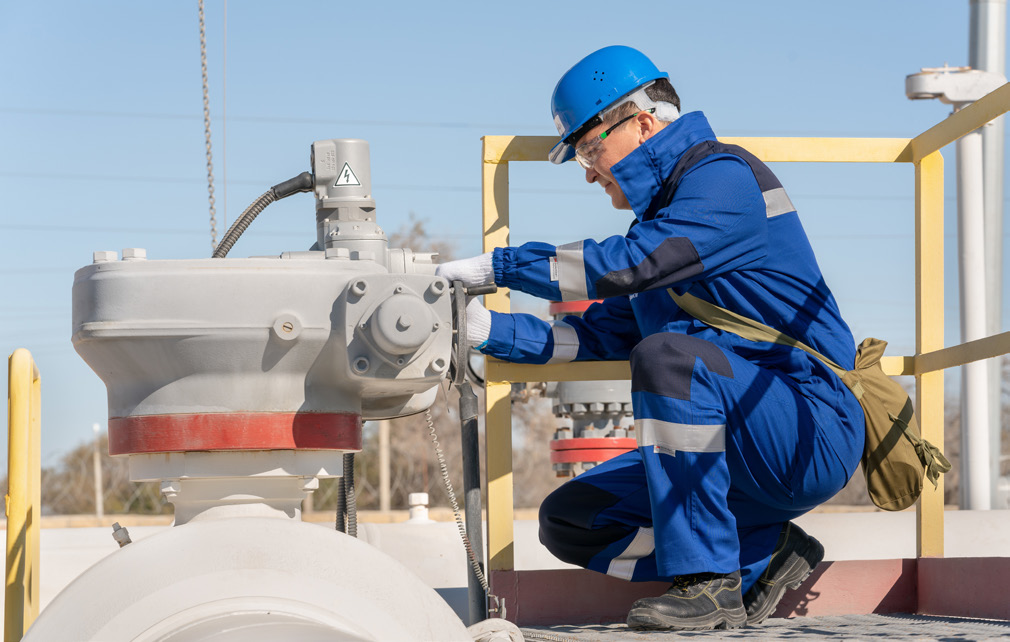
Waste management processes include accumulation, disposal, recycling, or transfer of waste to specialized organizations that hold all required permits, including waste-processing licenses and valid environmental permits. To reduce environmental risks associated with waste transportation, KMG subsidiaries take measures to minimize transportation distances or to ensure waste processing directly at production sites.
Waste recycling and recovery activities carried out by specialized organizations are subject to oversight by KMG to ensure compliance with contractual terms, design specifications, and technical requirements. When necessary, control laboratory testing of recovered materials is performed.
In 2025, KMG’s expenditures on oil waste remediation amounted to KZT 9.7 billion, of which KZT 3.8 billion related to historical oil waste.
TABLE 25. WASTE GENERATED BY TYPE, THOUSAND TONNES38
| Type of waste | 2023 | 2024 | 2025 |
|---|---|---|---|
| Hazardous waste | 383.1 | 358.0 | 370.4A |
| Non-hazardous waste | 52.8 | 79.7 | 78.7A |
| Ash-slag waste | - | - | - |
| Overburden | - | - | - |
| Other | 52.8 | 79.7 | 78.7 |
| Total: | 435.9 | 437.7 | 449.1A |
38. Waste is classified as hazardous and non-hazardous in accordance with the Waste Classifier approved by Order No. 314 of the Acting Minister of Ecology, Geology and Natural Resources of the Republic of Kazakhstan dated August 6, 2021.
THE RATIO OF THE AMOUNT OF RECYCLED WASTE TO THE AMOUNT OF NEWLY GENERATED WASTE, T/T
THE RATIO OF THE AMOUNT OF RECYCLED WASTE TO THE AMOUNT OF ACCUMULATED AND NEWLY GENERATED WASTE, T/T
Remediation of Historical Contamination and Land Reclamation
KMG continues to implement programs for the disposal of historically accumulated oil-bearing waste and the restoration of contaminated land at the facilities of Mangistaumunaigas JSC, Ozenmunaigas JSC, Embamunaigas JSC and KazTransOil JSC.
In 2025, about 338.8 thousand tonnes of historical waste were disposed of, reclamation of their territories was carried out and work began on clarifying the remaining volumes of oil-containing waste. The total area of reclaimed disturbed lands was 54.26 hectares.
Embamunaigas JSC has completed the cleanup of historically polluted lands within the boundaries of the contract territories and continues to eliminate pollution beyond them in accordance with the approved reclamation project and the positive conclusion of the State Environmental Assessment.
The implementation of these measures is part of KMG’s systematic approach to waste management and restoration of disturbed lands and is aimed at reducing accumulated environmental damage, increasing the share of waste recycling and minimizing environmental impacts.
HISTORICAL WASTE DISPOSED, THOUSAND TONNES
THE RATIO OF THE AREA OF POLLUTED LAND AT THE END OF THE YEAR TO THE BEGINNING OF THE YEAR, HA/HA
THE RATIO OF THE AREA OF RECLAIMED LAND DURING THE YEAR TO THE AREA OF POLLUTED LAND DURING THE YEAR, HA/HA
Decommissioning and Site Reclamation
In accordance with the legislation of the Republic of Kazakhstan and the terms of subsoil use contracts, KMG has legal obligations for the decommissioning and dismantling of production assets, as well as for the restoration of land areas at all fields. These obligations include the phased abandonment of non-productive wells, dismantling of pipelines and production facilities, reclamation of contract territories, and remediation of environmental impacts.
The assessment of asset retirement obligations is carried out by the Company separately for each contract. As of December 31, 2025, the carrying amount of the KMG Group’s provision for oil and gas asset retirement obligations amounted to KZT 142,314 million (as of December 31, 2024: KZT 142,009 million).
Procedures for the decommissioning and reclamation of contract territories are regulated by the Subsoil and Subsoil Use Code of the Republic of Kazakhstan and are implemented on the basis of approved project designs that have received positive expert reviews as required by law. Conservation of subsoil areas and technological facilities is also carried out in accordance with approved designs, except for certain categories of wells for which special rules apply. Requirements for well abandonment and conservation are established by the rules approved by Order No. 200 of the Minister of Energy of the Republic of Kazakhstan dated May 22, 2018.
For trunk oil and gas pipelines, in accordance with the Law of the Republic of Kazakhstan “On Trunk Pipelines”, KazTransOil JSC is responsible for pipeline decommissioning upon completion of their service life and for undertaking environmental restoration activities, including land reclamation. A provision for these obligations is formed based on cost estimates for the relevant works. As of 31 December 2025, the carrying amount of the KMG Group’s provision for pipeline decommissioning and land reclamation obligations amounted to KZT 24,053 million (as of December 31, 2024: KZT 37,405 million).
KMG continues to implement measures aimed at ensuring compliance with regulatory requirements and maintaining environmental safety during the decommissioning and reclamation of production facilities, consistently reducing the potential environmental impact of its operations.
Management of offshore wells
In 2025, no well drilling activities were carried out in the Kazakh sector of the Caspian Sea.
Previously, together with strategic partners Eni and LUKOIL PJSC, geological exploration activities were completed at the “Zhenis” and “Abai” subsoil use blocks. With regard to the “Al-Farabi” block, negotiations with LUKOIL PJSC are underway on the joint withdrawal of participants from the project and the termination of the contract.
In 2025, subsoil use contracts were signed for the “Zhylyoi” and “Bolashak” blocks, which are partially located in the Kazakh sector of the Caspian Sea. The contracts provide for the drilling of exploration wells within six years from the contract signing date. Given the high costs of offshore exploration, KMG seeks to share risks associated with exploration activities with international partners. In accordance with subsoil use contracts and joint operating agreements, all obligations related to offshore well management are delegated to specially established joint ventures.
Management decisions regarding drilling operations and offshore seismic surveys at joint ventures are taken by KMG and its partners within the framework of Supervisory Boards, Operating Committees, and their subcommittees (finance, technical, HSE, and procurement), in full compliance with international standards and the legislative requirements of the Republic of Kazakhstan. All duties related to offshore well management are detailed in the Operating Committee Regulations and the Joint Operating Agreement.
Prevention and response to oil spills
KMG considers continuous preparedness for responding to emergency oil spills (OSR) as one of its key environmental safety priorities. Special attention is given to offshore operations in the Caspian Sea, whose ecosystem is highly vulnerable due to the enclosed nature of the basin.
During offshore oil and gas operations, the Company applies enhanced environmental requirements, including baseline environmental studies prior to the commencement of work, assessment of potential environmental and social impacts, as well as monitoring of emissions, impacts, and emergency events at all stages - before, during, and after the completion of operations.
Before the start of offshore drilling, KMG ensures full readiness of response teams and equipment for potential oil spill emergencies. Following the completion of operations, continuous environmental monitoring of abandoned wells is conducted, including monitoring of ambient air quality, the condition of seawater and seabed sediments, biodiversity assessments, laboratory sample analysis, and photo and video surveillance of wellheads.
During offshore operations, KMG strictly adheres to the following principles:
- strict compliance with approved project solutions and environmental standards;
- adherence to the “zero discharge” principle, requiring all waste and wastewater to be removed to shore;
- equipping vessels with fish protection devices and strict prohibition of bilge water discharge;
- prohibition of activities during the fish spawning season (from April 1 to July 15);
- prohibition of fishing from production vessels within oil and gas operation zones;
- limiting well testing and hydrocarbon flaring during nighttime hours;
- compliance with special natural resource use regimes within offshore contract areas.
In 2025, a total of 587 incidents related to oil spills were recorded onshore, with a total spill volume of 622.7 tonnes. All spill cases were accounted for, regardless of volume or significance. The main causes of incidents included corrosion damage to oil pipelines, wear of steel pipes, and depressurization of collectors during hydrocarbon production and transportation. No offshore oil spills were recorded during the reporting year.
KMG implements a comprehensive system of measures aimed at reducing the number of accidents and failures of field pipelines, including regular diagnostics, reconstruction and replacement of equipment, the use of corrosion inhibitors, and pipeline cleaning. These measures contribute to improving the reliability and integrity of pipeline infrastructure.
KazTransOil JSC, in cooperation with law enforcement agencies, achieved the complete elimination of illegal taps into main oil pipelines. While two such incidents were recorded in 2019 with a total loss of KZT 6.4 million, no incidents were reported during 2020–2025. This result was achieved through enhanced monitoring by mobile teams equipped with GPS tracking, regular patrols of pipeline routes, and the deployment of the Optosense monitoring system.
KMG continues to improve its systems for the prevention and response to emergency oil spills, considering this area an unconditional priority and a key element in ensuring environmental safety and the sustainability of its operations.