
The Company's Approach to Sustainable Development Management
GRI 2-22
KMG recognizes the nature and scale of its impact on the economy, the environment, and society, and views sustainable development as a key factor in long-term business stability and performance. In this regard, the Company consistently integrates sustainability principles into its core business processes and corporate governance system.
Sustainable development management within the Company is carried out in accordance with the requirements and recommendations of international standards and initiatives, including the UN Global Compact, as well as in line with the Corporate Governance Code of Samruk-Kazyna JSC. The Company also supports the UN Sustainable Development Goals (UN SDGs), integrating them into the formation of strategic priorities and the implementation of operational activities.
KMG's Development Strategy for 2022-2031 defines sustainable development as one of the key strategic objectives. As part of its implementation, the Company commits to establishing a systematic approach to stakeholder engagement, integrating ESG factors into management decision-making processes, and achieving target performance indicators in the area of sustainable development.
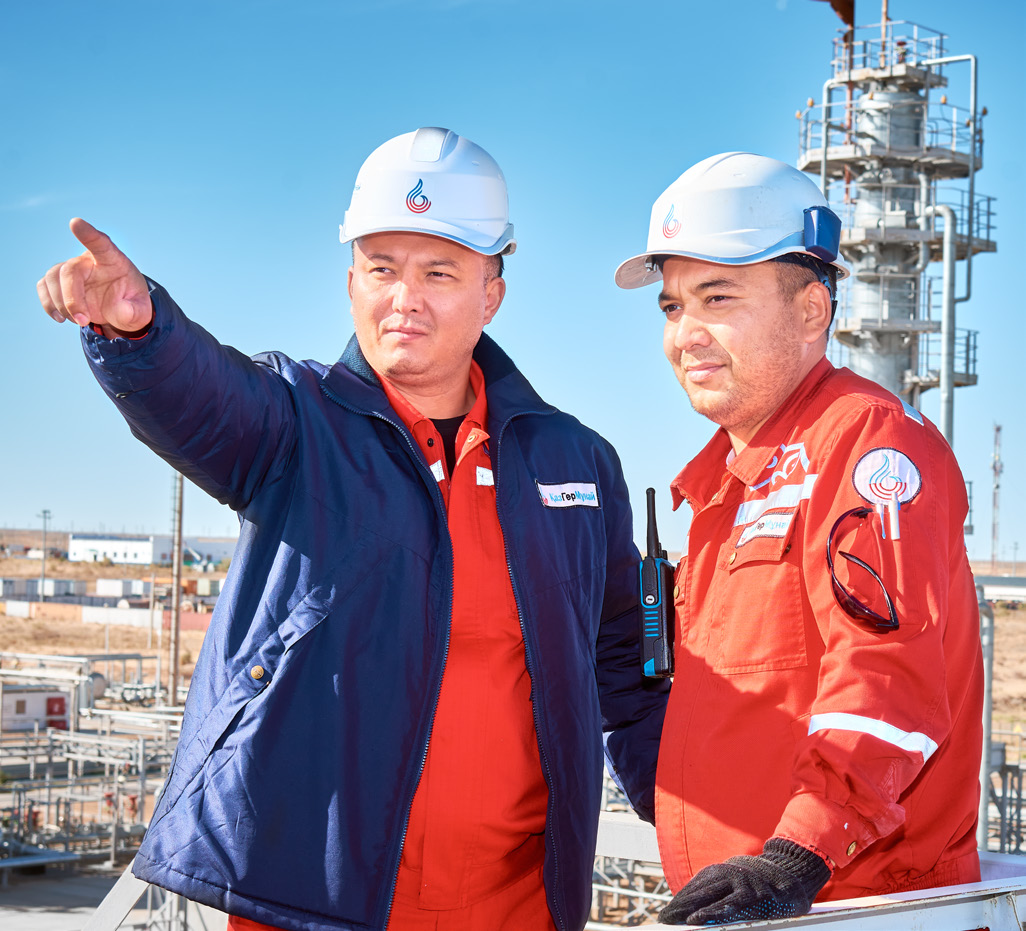
Sustainable Development Management System
The Sustainable Development Management System includes the following interrelated elements:
- Strategy, policies and goals - developing a long-term vision and integrating sustainable development principles into corporate governance and operational activities.
- Identification and management of risks and opportunities - incorporating ESG risks into the corporate risk management system, as well as analyzing opportunities related to sustainable development.
- Integration of ESG approaches into business processes - incorporating aspects of sustainable development into strategic and operational planning, investment activities, human resources management, and supply chain management.
- Engagement with stakeholders - building regular and systematic dialogue with key stakeholders, taking into account their expectations and interests.
- Reporting and monitoring - preparation of annual non-financial reporting in accordance with international standards and conducting independent assurance of disclosed information.
- Development of corporate culture and competencies - implementation of training and awareness programs for employees in the field of ESG, and fostering a culture of responsible business conduct.
Corporate Policies and Key Regulatory Documents
To strengthen the sustainable development management system and ensure the consistent integration of ESG principles across the KMG Group of Companies, key corporate policies, programs, and regulatory documents covering environmental, social, and governance aspects were adopted, updated, and implemented in 2025.
The key documents include:
Environmental Block (E)
- Environmental Policy.
- Energy Policy.
- Emissions Management Policy.
- Policy on the Closure of Facilities and Reclamation of Disturbed Lands at KMG's Subsurface Areas and Fields.
- KMG Low-Carbon Development Program until 2060 (LCDP-2060).
- Corporate Standard on Water Resources Management.
- Standard for Conducting Environmental Impact Assessments (EIA) of Proposed Activities.
- Waste Management Standard.
- Guidelines for the Management System in the Field of Occupational Health, Industrial Safety, and Environmental Protection.
- Regulation on Energy Conservation and Energy Efficiency Improvement within the KMG Group.
- List of Identified Environmental Aspects, Environmental Risks and Opportunities, and Environmental Impact Mitigation Measures for 2025.
Corporate Governance Block (G)
- Corporate Governance Code.
- Sustainable Development Policy.
- Sustainable Development Framework.
- Sustainable Development Management System Guide.
- Guidelines for Preparing the Sustainable Development Report.
- Code of Business Ethics.
- Anti-Corruption Standards.
- Anti-Corruption Policy.
- Information Security Policy.
- Guidelines for the Information Security Management System.
- Confidential Information Policy.
- Policy on Resolving Conflicts of Interest Among Employees and Officials.
- Internal Control System Policy.
- Corporate Risk Management System Policy.
- Policy on the Closure of Facilities and the Reclamation of Disturbed Lands at KMG's Subsurface Plots and Deposits.
- Rules for the Closure of Facilities and the Restoration of Disturbed Lands at KMG's Subsurface Plots and Deposits and at its Subsidiaries and Affiliates.
- Security Policy.
- Rules for Conducting Anti-Corruption Monitoring and Internal Analysis of Corruption Risks at KMG.
- KMG Corporate Regulation on Physical Security and Anti-Terrorism Protection.
- Internal Control System Regulation.
- KMG Economic Security Regulation.
- Regulations on the Supply of KMG Oil to the External Market.
- Economic Security Regulation.
- Quality Policy.
- Guidelines on Quality.
- Rules for Assessing Customer Satisfaction with Services.
- Rules for Planning Oil Refining and Petroleum Product Production within the KMG Group of Companies.
- Regulations for reviewing complaints regarding violations of the laws of the Republic of Kazakhstan, KMG’s internal documents, and those of its subsidiaries and affiliates.
- Model Regulations on the Ombudsman of KMG Group’s subsidiaries and affiliates.
- Rules for Resolving Corporate Conflicts at KMG.
Role of the Governing Bodies in Sustainable Development Management
GRI 2-12, GRI 2-13, GRI 2-14
The Board of Directors bears strategic responsibility for sustainable development issues, including the approval of key policies and consolidated reporting in this area.
The most significant ESG issues, initiatives, and the results of their implementation are discussed during regular meetings, as well as at a separate annual meeting dedicated to sustainability issues and at meetings of the Board's specialized Health, Safety, Environment, and Sustainable Development Committee.
Health, Safety, Environment, and Sustainable Development Committee coordinates sustainable development processes, establishes key performance indicators, and monitors their achievement.
Additionally, the following are involved in the sustainable development management system:
- Management Board - ensures the implementation of sustainable development principles, monitors the achievement of goals and KPIs, and oversees the execution of initiatives.
- Deputy Chairman of the Management Board responsible for sustainable development - coordinates approaches to achieving goals and KPIs, oversees the implementation of corporate standards, and supervises the preparation of reports.
- Department responsible for sustainable development - provides methodological support, coordinates the management of climate and ESG risks and opportunities, and oversees the preparation of sustainability reports.
- Relevant business units - implement initiatives, participate in risk and opportunity assessments, and provide data for reporting.
Selection and Implementation of Sustainable Development Initiatives
Sustainable development initiatives are developed based on the analysis of climate and ESG risks and opportunities, stakeholder expectations, and the Company's strategic priorities. The process includes the following stages:
- identifying material topics considering economic, environmental (including climate), and social aspects;
- setting priorities taking into account stakeholder perspectives;
- assessing the economic and technological feasibility of initiatives;
- developing and implementing action plans with established goals, KPIs, timelines, and responsible units;
- monitoring and evaluating effectiveness, with the possibility of adjusting approaches and measures.
Performance Assessment and Improvement of the Management System
The Company regularly monitors the effectiveness of implemented sustainability initiatives using a system of key performance indicators for sustainable development that cover economic, environmental, and social aspects.
To continuously improve the sustainable development management system, the following activities are carried out:
- monitoring the achievement of target indicators;
- management reviews;
- internal and external audits of reporting;
- assessment of the maturity of the management system;
- development and implementation of corrective actions.
The results of this analysis are used to update strategic priorities, enhance the effectiveness of the sustainability management system, and develop new initiatives in the area of sustainable development.