

Energy Consumption and Energy Efficiency
A systems approach to energy management
KMG is consistently developing its energy management system, viewing energy efficiency as a key factor in operational sustainability, competitiveness, and climate impact mitigation. At the KMG Group, energy conservation is integrated into production and management processes and implemented using a systems approach and unified methodological principles.
The international standard ISO 50001 “Energy Management Systems” is used as a basic framework, which ensures structured energy management, increased process transparency, and the use of reliable measurable data in decision-making.
To implement these principles, the Company has developed a regulatory framework, including the KMG Energy Policy and the Regulations on Energy Conservation and Energy Efficiency Management in the KMG Group, which apply to its subsidiaries and affiliates. This approach ensures uniformity of requirements while taking into account the industry and technological specifics of the companies.
Strategic initiatives
In 2024, KMG approved the LCDP-2060, which identifies improving energy efficiency and the rational use of energy resources as key long-term priorities. The Company views the implementation of these priorities as an important tool for enhancing operational resilience, reducing its carbon footprint, and ensuring business competitiveness in the context of the energy transition.
Energy efficiency priorities are focused on developing a systematic and consistent approach to energy consumption management across the entire KMG Group of Companies, taking into account industry specifics and differences in the technological processes of the enterprises.
Key areas for the implementation of strategic initiatives of the LCDP-2060
Long-term planning
KMG consistently develops comprehensive energy efficiency improvement plans, covering both current operational processes and prospective development projects. Long-term planning allows for anticipated changes in energy consumption patterns, technological trends, and climate requirements, as well as ensuring the continuity of activities across the KMG Group.
Replication of best practices
The company places special emphasis on identifying and disseminating successful energy conservation and efficiency practices. Replicating proven solutions across KMG Group companies accelerates the implementation of effective technologies and management approaches and improves the overall effectiveness of ongoing initiatives.
Effective Energy Management
The Company is implementing transparent and manageable energy management principles based on the use of reliable and comparable data. This allows decision-making processes to be based on objective information on energy resource flows, identify deviations, and improve energy efficiency at production facilities.
Cost optimization and rational use of resources
As part of its LCDP-2060 strategic initiatives, KMG is consistently identifying and eliminating unproductive energy costs, optimizing operating modes, and increasing resource efficiency. This approach is aimed at reducing costs and enhancing operational sustainability.
Centralized monitoring and control
One of the priorities is the development of centralized energy consumption monitoring tools that provide a unified approach to monitoring and managing operational processes in energy efficiency. This approach facilitates improved manageability, the timely identification of inefficiencies, and the dissemination of best practices within the KMG Group.
Improving profitability and efficiency
Reducing fuel and energy resource losses and minimizing inefficient costs contributes to increased profitability of production processes. The Company views increased energy efficiency as a key driver of improved financial performance and business sustainability.
Interaction with government agencies
KMG maintains ongoing interaction with government agencies on energy conservation and energy efficiency, participating in discussions of regulatory initiatives and implementing national regulatory requirements. Cooperation in this area promotes coordinated actions and ensures that government priorities are taken into account when implementing corporate programs.
Improving financial performance
The economic impact of reduced energy consumption translates into increased economic efficiency for the Company. Reducing energy costs allows for the reallocation of financial resources toward development, modernization, and the implementation of strategic initiatives.
The implementation of these strategic initiatives of the LCDP-2060 ensures KMG a sustainable reduction in energy costs, increased operational efficiency, and progressive progress towards achieving decarbonization goals.
Energy consumption
GRI 302-1
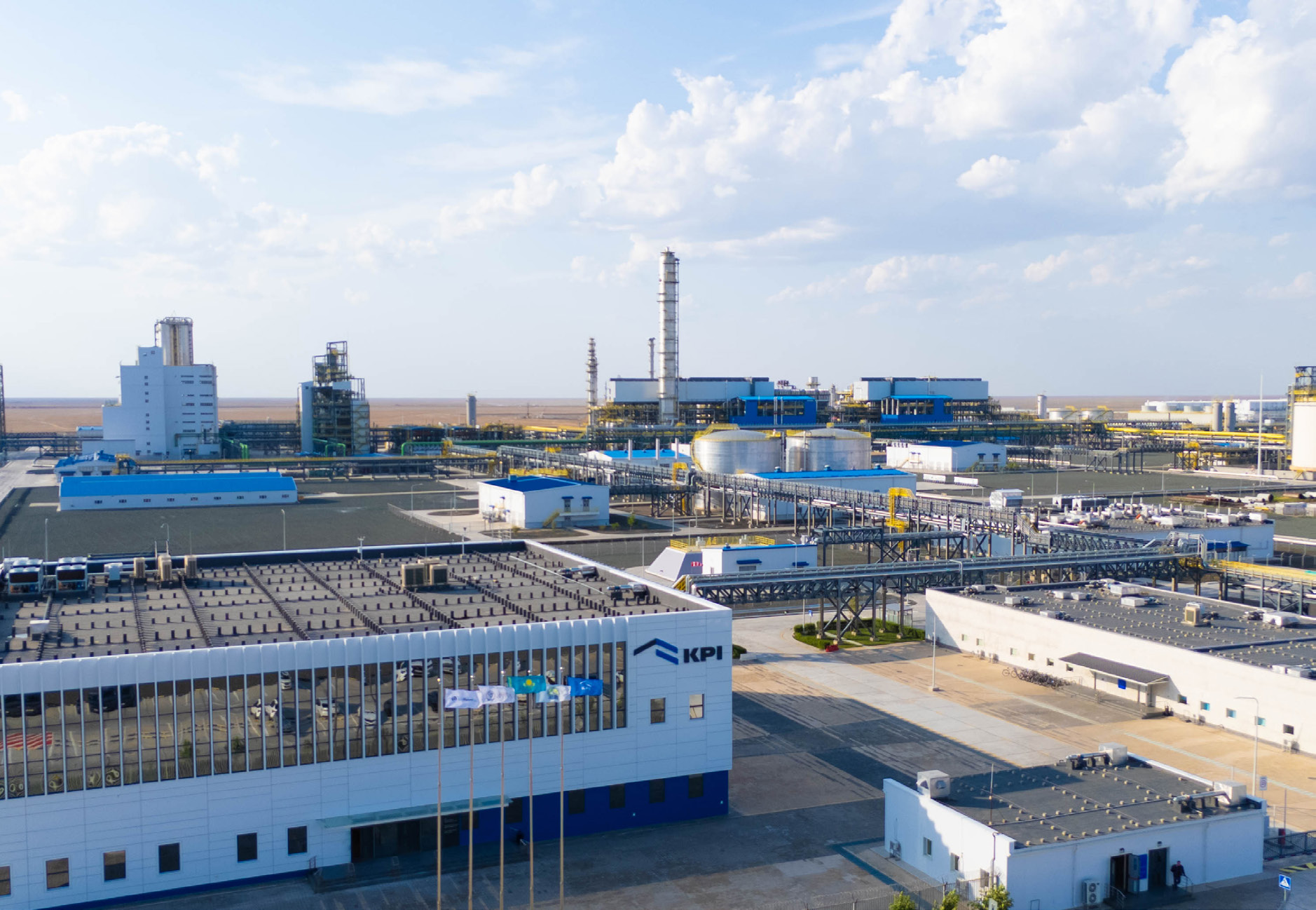
In 2025, the total fuel and energy resource (FER) consumption by the KMG Group amounted to 124.9 million GJ27, approximately 3.5% lower than the 2024 level (129.4 million GJ). This decrease in total fuel and energy resource consumption was due to a reduction in fuel use in key energy-intensive operations.
This primarily affected consumption during oil and gas exploration and production, as well as electricity consumption. Since these categories account for the largest share of the overall FER, their reduction had a decisive impact on the final reduction in the total indicator in 2025.
Energy consumption indicators
GRI 302-1, GRI 302-4
TABLE 17.28
| Indicator, thousand GJ | 2023 | 2024 | 2025 |
|---|---|---|---|
| Consumption of fuel from non-renewable sources | |||
| Liquid fuels, including: | 1,578 | 1,805 | 1,785 |
| Petrol | 58 | 93 | 97 |
| Diesel fuel | 1,520 | 1,712 | 1,689 |
| Boiler and furnace fuel, including: | 17,846 | 5,221 | 3,398 |
| Heating oil | 14,157 | 2,500 | 1,824 |
| Oil | 1,169 | 1,184 | 632 |
| Fuel oil | 2,520 | 1,537 | 942 |
| Oil refinery gas | 28,223 | 35,995 | 36,351 |
| Associated petroleum gas | 12,933 | 13,809 | 12,737 |
| Gas, including: | 46,794 | 53,509 | 52,067 |
| Natural gas | 30,264 | 34,725 | 32,873 |
| Stripped gas | 16,461 | 18,718 | 16,324 |
| LPG | 69 | 65 | 35 |
| Off-gases from the cold section | - | - | 1,989 |
| Deethanizer off-gases | - | - | 846 |
| Total: | 107,373 | 110,339 | 106,337A |
| Consumption of electricity and heat energy | |||
| Renewable energy | 14 | 40 | 134 |
| Electricity, including: | 15,583 | 17,736 | 17,442 |
| Purchased | 12,919 | 15,081 | 14,746 |
| In-house production by the Company | 2,663 | 2,655 | 2,696 |
| Thermal energy, including: | 20,348 | 26,722 | 21,384 |
| Purchased | 3,818 | 3,943 | 3,694 |
| In-house production by the Company | 16,529 | 22,779 | 17,690 |
| Total: | 35,931 | 44,458 | 38,826A |
| TOTAL ENERGY CONSUMPTION | 124,125 | 129,403 | 124,911A |
27. Includes energy generated from the combustion of off-gases from the cold section and deethanizer off-gases of Kazakhstan Petrochemical Industries Inc. LLP, which are classified as secondary products of the technological process.
28. Approved conversion coefficients established by Order of the Minister for Investment and Development of the Republic of Kazakhstan dated March 31, 2015 No. 387 are applied to convert various types of energy resources into a unified energy unit of measurement.
Structure of consumption of fuel and energy resources
KMG Group’s energy consumption is determined by several key resource types, reflecting the specific nature of the Company’s production activities. The structure of fuel and energy resource consumption in 2025 will be dominated by:
- Electric energy - 14.7 million GJ;
- Thermal energy - 3.7 million GJ;
- Motor fuel29 - 1.8 million GJ;
- Boiler and furnace fuel30 - 104.6 million GJ.
In 2025, the KMG Group of Companies’ own generation volume amounted to 748.9 million kW·h of electric energy and 4,225.2 thousand Gcal of thermal energy.
ENERGY CONSUMPTION BY SEGMENT
- Oil and Gas Exploration and Production
- Oil Transportation
- Oil and Gas Refining
- Petrochemicals
TABLE 18.
| Energy consumption by segment, thousand GJ | 2023 | 2024 | 2025 |
|---|---|---|---|
| Oil and gas exploration and production | 55,083 | 57,285 | 53,166 |
| Oil and gas processing | 64,423 | 59,492 | 54,483 |
| Oil transportation | 4,619 | 4,229 | 4,183 |
| Petrochemicals | - | 8,397 | 13,079 |
29. gasoline, diesel fuel
30. heating oil, oil, fuel oil, refinery gas, associated petroleum gas, natural gas, stripped gas, LPG, waste gases
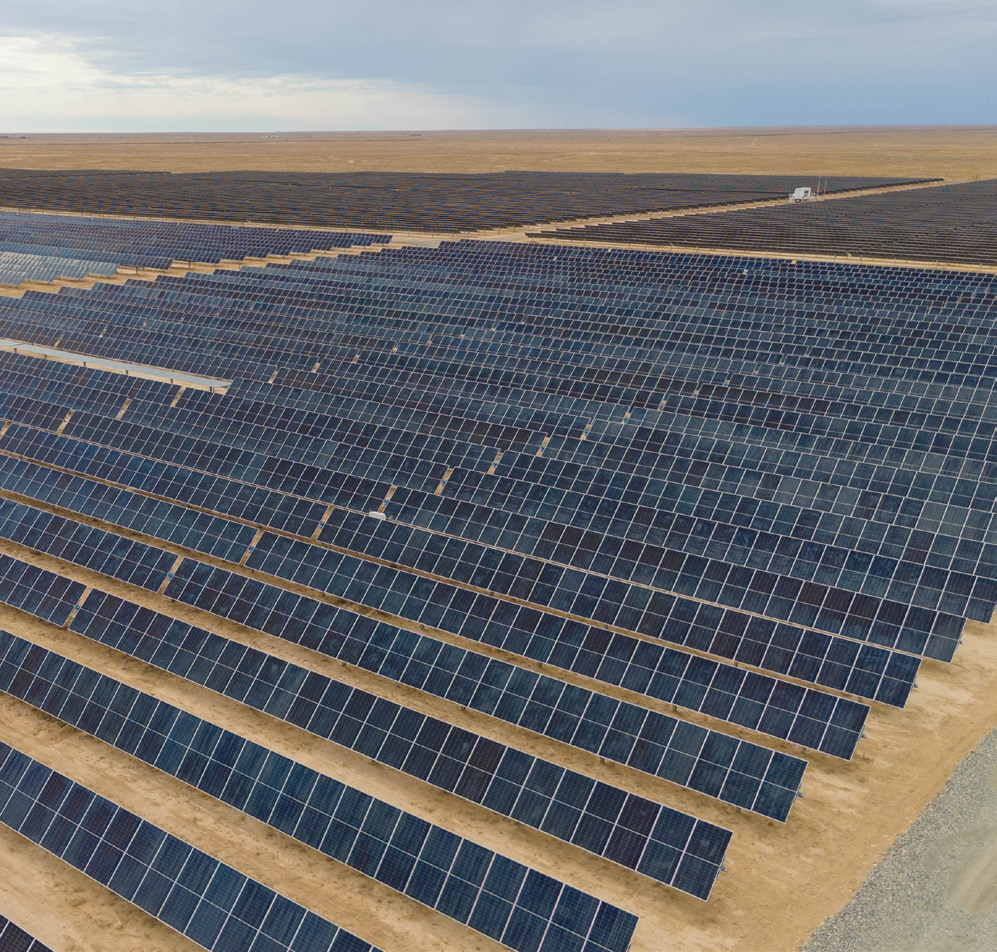
As part of its renewable energy development projects, KMG, together with its partners, continues construction of a 247 MW hybrid power plant in Zhanaozen, where a 50 MW solar power plant was commissioned in September 2025, and the launch of wind and gas generation (77 and 120 MW) is scheduled for the end of 2026. In addition, detailed design work is ongoing for the 1 GW Mirny project with an energy storage system. In 2025, the volume of electricity consumption from renewable energy sources amounted to 37,230.9 thousand kWh, and 10,000 I-Rec certificates were acquired.
Structure of fuel and energy
- Electrical energy
- Motor fuel
- Thermal energy
- Boiler and furnace fuel
Reducing energy consumption
GRI 302-4, GRI 305-5
KMG is consistently implementing energy efficiency measures aimed at optimizing energy consumption and reducing its carbon footprint. In 2025, 87 process equipment modernization projects were completed, including replacing furnace gas burners, implementing energy-saving technologies, optimizing heat generation and consumption, upgrading lighting systems, and other work. These measures resulted in annual savings of 1,935 thousand GJ of fuel and energy resources and a reduction in greenhouse gas emissions of 128.3 thousand tonnes of CO₂.
Energy-saving measures also included the modernization of process furnaces and boilers, the installation of variable frequency drives on pumps, thermal integration of process flows, and the transition to energy-efficient lighting systems, which provided an additional sustainable effect in terms of reducing energy consumption and increasing the efficiency of production processes.
Economic and environmental impact:
- Annual energy savings: 1,935 thousand GJ
- The equivalent reduction in greenhouse gas emissions is 128.3 thousand tonnes of CO₂
TABLE 19. ENERGY SAVINGS OBTAINED FROM THE IMPLEMENTATION OF ENERGY CONSERVATION PROGRAMS, THOUSAND GJ
| Indicator | 2023 | 2024 | 2025 |
|---|---|---|---|
| Energy savings obtained from the implementation of energy conservation programs, thousand GJ31 | 717 | 2,361 | 1,935A |
| Equivalent greenhouse gas emissions reduction (Scopes 1 and 2) achieved through the implementation of energy efficiency programs, thousand tonnes of CO₂32 | 45.1 | 174.9 | 128.3A |
31. Energy resource savings are determined using a calculation based method based on the results of energy audits, including an assessment of implemented energy efficiency measures.
32. The calculation includes only reductions in CO₂ emissions and does not include other gases. To convert volumes of saved energy resources into a greenhouse gas emissions reduction equivalent, emission factors defined under the Scope 1 and Scope 2 calculation methodology are applied.
Volumes of reduced consumption:
- Electricity - 22,468 thousand kW*h (81 thousand GJ)
- Thermal energy - 21,208 Gcal (89 thousand GJ)
- Boiler and furnace fuel33 - 2,855 tonnes (118 thousand GJ)
- Dry stripped gas - 5,807 thousand m³ (250 thousand GJ)
- Natural gas - 37,935 thousand m³ (1,282 thousand GJ)
- Diesel fuel - 65 tonnes (3 thousand GJ)
- Associated petroleum gas - 3,310 thousand m³ (112 thousand GJ)
The total costs for the implementation of energy efficiency measures in 2025 amounted to KZT 6,172.89 million.
The measures taken not only reduced energy consumption but also increased operational efficiency, lowering costs and minimizing environmental impact.
33. Fuel oil, refinery gas
Energy intensity
GRI 302-3
In 2025, the KMG Group’s specific energy consumption in the hydrocarbon production sector amounted to 2.39 GJ per ton of produced hydrocarbons (HHC), 59% higher than the IOGP global average of 1.5 GJ/t. However, the KMG Group average is not representative due to significant differences in the energy intensity of individual enterprises. Ozenmunaigas JSC and Karazhanbasmunai JSC have a significant impact, with their specific energy consumption significantly exceeding industry standards.
Karazhanbasmunai JSC consumes energy 5 times higher than the IOGP global average. This is due to the specific production conditions at the Karazhanbas field, where oil is extracted using steam and hot water displacement. This method is necessary due to the high paraffin content and the specific rheological properties of the oil, which require heating not only in winter but also in summer.
Ozenmunaigas JSC demonstrates energy consumption for production that is more than twice the industry standard. In 2024, the company introduced hot oil well treatment technology, which also increased energy consumption.
SPECIFIC ENERGY CONSUMPTION FOR THE EXTRACTION OF 1 TON OF HYDROCARBONS, GJ/T
TABLE 20. SPECIFIC ENERGY CONSUMPTION (BY SEGMENT)34
| GRI 302-3. Specific energy consumption (by segment) | Unit of measurement | 2025 |
|---|---|---|
| Oil and gas exploration and production | GJ/tonnes of extracted hydrocarbons | 2.39A |
| Recycling | GJ/tonnes of processed hydrocarbons | 3.00A |
| Transportation | GJ/tonnes | 0.09A |
| Petrochemicals | GJ/m³ | 0.01 |
KMG maintains records of energy resource consumption only within the organization; therefore, energy consumption outside the organization is not reflected in this Report.
34. The calculation of the energy intensity indicator takes into account the types of energy and energy resources disclosed in Table 17.