

Economic Performance
KMG ensures the reliable functioning of the oil and gas sector, supports the regions where it operates, and implements priority sustainable development projects. The Company creates long-term economic value for stakeholders through investment activities, stable financial results and tax contributions, job creation, social initiatives, and the development of domestic producers.
During the reporting period, the Company continued to implement its strategic priorities aimed at increasing operational efficiency, investment attractiveness, and the sustainable development of its business model amid the transformation of the global energy market.
In 2025, the Company’s economic priorities were implemented in line with sustainability principles, climate and ESG factor assessments, and the long-term transformation of the business model in the context of the global energy transition. The Company’s net profit for the reporting period amounted to KZT 1,072 billion. The volume of dividends paid to shareholders amounted to KZT 300 billion. Since its IPO, KMG’s share price 8 has shown positive growth: the stock price increased by 158% in 2025 compared to 2022.
Economic Value Generated and Distributed
GRI 3-3, GRI 201-1, GRI 201-4, GRI 415-1
TABLE 3. Indicators of Economic Value Generated and Distributed
| Indicator | 2023 | 2024 | 2025 |
|---|---|---|---|
| Direct economic value generated, KZT billion | |||
| Total revenue 9 | 9,242 | 9,238 | 10,445 A |
| Economic value distributed, KZT billion | 8,303 | 8,269 | 9,697 A |
| Operating expenses 10 | 6,303 | 6,104 | 7,310 |
| Wages and employee benefits | 612 | 722 | 776 |
| Payments to capital providers | 584 | 593 | 599 |
| Payments to government | 798 | 846 | 1,007 |
| Investments in local communities | 6 | 4 | 4 |
| Economic value retained, KZT billion | 939 | 969 | 748 A |
KMG did not receive any financial assistance in monetary form from the government A during the reporting period and does not make donations for governmental or political purposes. KMG does not engage in lobbying activities or political financing, taking into account all forms of lobbying and political expenditures, including non-monetary contributions.
KMG is one of the largest taxpayers in the country. During the reporting period, the Company paid KZT 1,242 billion in taxes, which were directed toward financing government programs and supporting economic development.
8 December 8, 2022, secondary trading of KMG shares commenced on the Astana International Exchange (AIX) of the Astana International Financial Centre and on the Kazakhstan Stock Exchange. The placement price per share was KZT 8,406 (2022).
9 Total revenue – includes total revenue and other income as presented in the consolidated statement of comprehensive income.
10 Operating expenses represent total expenses and costs recognized in the consolidated statement of comprehensive income, excluding corporate income tax and other taxes, employee wages and benefits, finance costs, and impairment losses on property, plant and equipment.
Tax Policy and Payments to the State
GRI 207-1, GRI 207-4
Approach to Taxation
KMG has a Corporate Tax Accounting Policy (hereinafter – CTAP) in place, which ensures unified principles and approaches to tax accounting across all entities of the KMG Group of Companies. The Policy has been developed in accordance with the requirements of the tax legislation of the Republic of Kazakhstan, International Financial Reporting Standards (IFRS), as well as the Company’s internal regulatory documents, and is aimed at enhancing the comparability and transparency of tax information.
The Company’s tax policy is based on the following key principles:
- Obligation to Pay Taxes – KMG and its subsidiaries and affiliates ensure timely and full payment of taxes and other mandatory payments to the state budget of the Republic of Kazakhstan.
- Fairness of Taxation – double taxation of the same object within the same period is not allowed.
- Integrity – refusal to use aggressive tax optimization schemes and avoidance of unjustified tax benefits.
In implementing its tax policy, the Company takes into account the specifics of its operations, as well as the potential economic and social impacts of its decisions. The approach to taxation is aligned with the KMG Development Strategy for 2022– 2031 and supports the long term sustainability of the business.
The Corporate Tax Accounting Policy applies to all subsidiaries and affiliates of the KMG Group, except for:
- Entities engaged in subsoil use operations under production sharing agreements that provide for a special stable tax regime;
- Entities registered outside of Kazakhstan.
Based on CTAP, KMG and all its subsidiaries have developed and implemented individual Tax Accounting Policies that consider the specific characteristics of their industry operations.
Information on tax payments remitted to the budget is disclosed annually on the KMG corporate website: https://www.kmg.kz/ru/investors/reporting/
Tax Administration and Control
GRI 207-2
Issues of tax risk management are integrated into the corporate risk management system. Within the existing procedures, the Company regularly analyzes amendments to tax legislation and their enforcement practices, assesses potential implications for the KMG Group, and prepares proposals to improve regulation where necessary.
More details on the risk management process are provided in the section “Climate and ESG Risk Management”.
Stakeholder Engagement
GRI 207-3
KMG is included in the list of large taxpayers subject to tax monitoring in accordance with the tax legislation of the Republic of Kazakhstan. The Company maintains relationships with government bodies strictly within the legal framework, ensuring systematic and continuous dialogue with all stakeholders through business correspondence, participation in meetings and public consultations, and via official communication channels.
KMG continuously analyzes challenges related to the application of tax legislation across the Group, followed by the development and submission of substantiated proposals for its improvement. The Company’s initiatives aim to:
- ensure predictable and favorable tax conditions for KMG Group’s operations;
- systematically improve Kazakhstan’s tax legislation, customs legislation, and the Customs Union regulations, as well as the legislation on transfer pricing;
- enhance operational efficiency and increase overall corporate value.
Protection of the KMG Group’s interests in the regulatory sphere is carried out through:
- developing proposals (including justifications, presentations, and calculations) to adjust tax and related legislation;
- reviewing and preparing expert opinions on draft legal acts related to taxation, subsoil use, and enforcement of tax legislation;
- supporting legislative initiatives of the KMG Group through direct participation of KMG representatives in advisory and consultative bodies under industry associations and government agencies (Kazakhstan Taxpayers Association), the KAZENERGY Association, the National Chamber of Entrepreneurs “Atameken”, as well as in working groups with authorized bodies and the Parliament of the Republic of Kazakhstan.
The Company maintains active engagement with shareholders, industry associations, and other stakeholders, ensuring transparency in tax administration, compliance with legislation, and timely responses to inquiries. This approach allows KMG to maintain regulatory stability, minimize legal and tax risks, and consistently strengthen stakeholder trust.
Investment Projects
GRI 3-3, GRI 203-1, GRI 203-2
KMG implements an investment program aimed at expanding the resource base, modernizing infrastructure, improving operational efficiency, and advancing sustainability projects. During the reporting period, the Company continued to prioritize investment projects in line with its strategic objectives, as well as climate and ESG risk assessments. The implementation of these projects generates a multiplier effect for the economy of Kazakhstan, stimulates the development of related industries, and contributes to job creation.
Overview of the Investment Portfolio
In accordance with the KMG Development Strategy for 2022–2031, the Company consistently builds an investment portfolio aimed at long term growth, resilience, and technological modernization. The portfolio includes a wide range of projects focused on business diversification, expanding the product range, improving the efficiency of the value chain, and strengthening the resource base. The portfolio covers both KMG’s traditional areas – exploration, transportation, and oil refining – and new development vectors such as petrochemicals, alternative energy, and decarbonization projects at the Company’s existing assets.
As of the end of 2025, the total value of investment projects involving the Company amounted to KZT 62,499 billion, including KZT 22,354 billion11 attributable to KMG.
As part of the long term growth strategy and efforts to strengthen competitive positions, in 2025 KMG continued to actively advance its investment activities. During the year, final investment decisions (FIDs) were adopted for projects totaling KZT 544 billion, of which KZT 531 billion correspond to KMG’s share.
TABLE 4. Portfolio of Investment Projects
| Field of activity | Total value of the investment portfolio, KZT billion | Value of the investment portfolio attributable to KMG, KZT billion | ||
|---|---|---|---|---|
| 31.12.2024 | 31.12.2025 | 31.12.2024 | 31.12.2025 | |
| Exploration and production of oil and gas | 42,747 | 52,300 | 13,216 | 16,451 |
| ESG projects | 991 | 728 | 363 | 200 |
| Service projects | – | – | – | – |
| Oil transportation | 368 | 411 | 136 | 154 |
| Oil refining and marketing of petroleum products | 587 | 573 | 501 | 364 |
| Oil and gas chemistry | 6,460 | 8,353 | 5,063 | 5,051 |
| Other | 117 | 134 | 111 | 134 |
| Total | 51,270 | 62,499 | 19,390 | 22,354 A |
11 Taking into account KMG’s participation in megaprojects (Tengiz, Kashagan, Karachaganak) and joint ventures. Includes historical project costs and foreign-exchange adjustments. The data reflect preliminary cost estimates for exploration projects, assuming their further implementation.
Implementation of Investment Projects in 2025
EXPLORATION AND PRODUCTION OF OIL AND GAS
Project: Geological Study of Subsoil for Advanced Seismic Survey on Five Blocks (GSS 1.0) (Mugodzhary, Berezovsky, Zharkyn, Bolashak, and Northern Ozen)
Within the project, field seismic surveys were conducted, including data processing and interpretation. Subsoil use contracts were obtained for three blocks: Northern Ozen, Bolashak, and Berezovsky.
Project: Geological Study of Subsoil for Advanced Seismic Survey on Three Blocks (GSS 2.0) (Southern Shu–Sarysu, Shygys, Bereke)
During the reporting period, licenses for geological study were obtained for three blocks – Southern Shu Sarysu, Shygys, and Bereke – for the purpose of conducting advanced seismic surveys aimed at reducing geological risks and determining input data for geological and techno economic assessments.
New Subsoil Use Contracts for Exploration
Contracts for exploration and production of hydrocarbons were signed for several technically complex blocks:
- Northern Ozen block (Mangystau Region);
- Bolashak block (Mangystau Region);
- Zhylyoi block (Atyrau Region);
- Berezovsky block (West Kazakhstan Region).
Kalamkas-sea and Khazar Field Development Project
In 2025, the basic design was completed and a package of documents was prepared for the Final Investment Decision (FID) to proceed to the next stage of the Kalamkas-sea and Khazar project.
Rozhkovskoye Field Development Project
Under the Rozhkovskoye field development project, the transition to project equipment for Phase 1 with a design capacity of 1.6 million m³ of gas per day was completed. Actual gas production in 2025 amounted to 469 million m³, and gas condensate production totaled 343 thousand tonnes.
Urikhtau Project
In 2025, work was carried out on drilling and completion of two production wells at the East Urikhtau field. Pipeline overhaul works were also completed.
A key focus during the reporting period was preparations for the industrial development of the gas-condensate part of the field. The project provides for the development of approximately 30 billion m³ of natural gas reserves. In 2026, the industrial development of the Central Urikhtau field is planned to commence, with gradual annual ramp-up of gas production to a potential level of 1 billion m³ per year.
MAJOR PROJECTS: TENGIZ, KARACHAGANAK, KASHAGAN
KMG participates in the development of the country’s largest oil and gas assets – the Tengiz (20% participation interest), Kashagan (16.87%) and Karachaganak (10%) fields – in partnership with international strategic investors.
Tengiz
TCO completed the implementation of the Future Growth Project / Wellhead Pressure Management Project (FGP/WPMP). Under the project, TCO’s production capacity increases by 12 million tonnes per year. As of the end of 2025, project expenditures amounted to USD 47.8 billion (approved budget – USD 48.9 billion).
TCO has now reached its design capacity: current daily production is approximately 33 thousand tonnes. Total daily oil production of TCO amounts to approximately 120 thousand tonnes.
Karachaganak
In January 2025, production testing for the Fifth Gas Re-Injection Compressor project was completed. In March 2025, the commissioning certificate was signed.
The Sixth Gas Re-Injection Compressor project is in the active construction stage. The forecasted commissioning date is March 2026. The project supports the hydrocarbon production plateau at 10–11 million tonnes per year.
Kashagan
Oil production at the field continues under Stage 1. In parallel, Stage 2 projects are under consideration, aimed at increasing total oil and condensate production to approximately 710 thousand barrels per day (~89.5 thousand tonnes per day).
- Stage 2A. Provides for an increase in production by 6.3 thousand tonnes per day (to 63 thousand tonnes per day / 500 thousand barrels per day) through the supply of raw gas to the planned gas processing plant of NC QazaqGaz JSC, with a capacity of 2.5 billion m³ per year. An agreement on basic design has been signed between NCOC and NC QazaqGaz JSC. Following its completion, readiness for implementation will be assessed, conditions for raw gas offtake will be agreed, and a joint investment decision will be made.
- Stage 2B. Envisages an additional production increase of 26.5 thousand tonnes per day (210 thousand barrels per day) – up to 89.5 thousand tonnes per day (710 thousand barrels per day) – with additional production of 6 billion m³ of raw gas per year. Conceptual studies continue on potential synergies with the Tengiz field.
OIL REFINING AND PETROLEUM PRODUCTS MARKETING
Given the expected increase in domestic demand for petroleum products, ensuring reliable supply to the domestic market through the development of local refining remains a priority for KMG. In this regard, options are being considered to expand the production capacity of PetroKazakhstan Oil Products LLP to 12 million tonnes per year and Pavlodar Petrochemical Plant LLP to 9 million tonnes per year.
KMG is implementing projects to extend turnaround intervals at all refineries, accompanied by a set of measures aimed at improving equipment reliability.
Atyrau Oil Refinery LLP. In 2025, as part of the project to improve refinery performance, subprojects aimed at removing technological bottlenecks to increase the output of light petroleum products were prioritized.
Pavlodar Petrochemical Plant LLP. Projects are being implemented to produce winter diesel fuel, including the reconstruction of the diesel hydrotreating unit with the integration of a dewaxing unit, and the construction of a hydrogen production unit. Commissioning is planned for 2026.
JV CASPI BITUM LLP. In 2024–2025, the project to increase oil processing capacity to 1.5 million tonnes per year, with road bitumen output of up to 750 thousand tonnes per year, was implemented.
Construction of the Gas Processing Plant (GPP) in Zhanaozen
The project is being implemented by Kazakh Gas Processing Plant LLP and provides for the processing of natural and associated gas in volumes of up to 900 million m³.
On 17 February 2025, a positive conclusion of the RSE “Gosexpertiza” was received for the 1st start up complex (hereinafter – SC 1) of the Project. For SC 1, general construction works were completed, equipment for the main step down substation was delivered, and installation works are underway.
On 14 July 2025, a positive conclusion of RSE “Gosexpertiza” was received for the working design documentation of the 2nd start up complex (hereinafter – SC 2). Within SC 2, construction and installation works of auxiliary buildings and structures are ongoing. Production of long lead equipment is in progress, and deliveries of manufactured equipment to the construction site are underway in stages. Continuous interim inspections and acceptance of work stages are conducted with the participation of the EPC contractor and the Client at manufacturing facilities in China.
PETROCHEMICALS
KMG is developing its petrochemical business segment, which has a high potential for a multiplier effect across the entire national economy. KMG’s integrated petrochemical complex includes the following key facilities:
- polypropylene production plant (Kazakhstan Petrochemical Industries Inc. LLP);
- polyethylene production plant;
- gas separation complex (hereinafter – GSC);
- main pipelines for transporting ethane and propane in Atyrau Region.
In 2025, the investment phase for the construction of the polypropylene production plant in Atyrau Region (a project of Kazakhstan Petrochemical Industries Inc. LLP) was completed.
Construction of the First Integrated Petrochemical Complex in Atyrau Region – Phase Two (Polyethylene Production)
On March 31, 2025, main construction works began at the polyethylene plant with a capacity of 1.25 million tonnes per year, located in the special economic zone of Atyrau Region.
The project includes the construction of two major units – a pyrolysis unit and a polymerization unit, as well as offsite facilities.
Construction of the Pyrolysis Unit
In September 2024, an EPC contract was signed for the pyrolysis unit with a consortium comprising Tecnicas Reunidas S.A. (Spain) and Sinopec Engineering Incorporation (China). In January 2025, long lead equipment orders were placed. In March 2025, the EPC contractor began main construction works at the pyrolysis unit, including pile driving and foundation installation. In 2026, delivery of long lead equipment and the start of metal structure and equipment installation works are planned.
Construction of the Polymerization Unit and Offsite Facilities
On May 29, 2025, an EPC contract was signed for the polymerization unit and offsite facilities with Tecnimont S.p.A (Italy) in consortium with Sinopec Shanghai Engineering Co. (China). Earthworks and piling works are underway. Engineering activities and procurement of long lead and large size equipment are ongoing. In 2026, the installation of metal structures and equipment is scheduled to begin.
Construction of the Gas Separation Complex
On August 5, 2025, an EPC contract for the construction of the Gas Separation Complex was signed. The GSC is expected to process up to 9.1 billion m³ of dry gas per year from the Tengiz field and annually produce up to 1.6 million tonnes of ethane and 360 thousand tonnes of propane.
Working documentation is being prepared, and long lead equipment orders have been placed. Early construction activities have begun, including site preparation: grading, removal of the topsoil layer, and delivery of inert materials. In parallel, modernization of the contractor’s (CCIC) existing camp is in progress, including setup of temporary office facilities. In November 2025, test piles were installed to verify bearing capacity in actual soil conditions.
In 2026, the main focus will shift to transitioning into the active construction phase.
Construction of Main Pipelines (Ethane, Propane) in a Single Corridor in Atyrau Region
In the 2nd quarter of 2025, a final investment decision was made to transition the project to the construction phase. The project envisions the construction of two main pipelines (an ethane pipeline and a propane pipeline), each approximately 210 km long, for transporting ethane and propane fractions in liquefied form from the Tengizchevroil (TCO) facilities and the gas separation complex at the Tengiz field to polyethylene and polypropylene production plants.
In December 2025, an EPC contract was signed with a consortium consisting of China Petroleum Pipeline Engineering Co., Ltd., CITIC Construction Co., Ltd., and CPPE Kazakhstan LLP.
In 2026, it is planned to develop and approve the Technical Regulation of the Republic of Kazakhstan “On the requirements for main ethane and propane pipelines for transporting ethane and propane fractions in liquefied form”, as well as to develop and approve the Working Design with a positive conclusion from the State Expertise (RSE “Gosexpertiza“) on project documentation, place equipment orders, and begin construction and installation works.
Prospective Projects in the Oil and Gas Chemical Industry
KMG is considering the implementation of promising projects aimed at developing Kazakhstan’s chemical industry. This area will stimulate the local economy, create jobs, increase tax revenues, boost the country’s export potential, and help meet domestic market needs.
Prospective Project: Construction of a Terephthalic Acid (TPA) and Polyethylene Terephthalate (PET) Plant
The project is planned for implementation by KMG PetroChem LLP. At the current stage, a strategic partner has not been determined; negotiations are underway with potential strategic partners. The financing structure and other parameters will be clarified after the partner and project configuration are finalized.
Prospective Project: Construction of a Gas-Chemical Complex for Urea Production
In 2025, during the official visit of the President of the People’s Republic of China, Xi Jinping, to the Republic of Kazakhstan, a four-party Framework Agreement was signed between KMG, CNPC, the Ministry of Energy of the Republic of Kazakhstan, and the Akimat of Aktobe Region, achieving several key arrangements aimed at deepening cooperation in the oil and gas sector, including joint implementation of the project.
The construction of a urea and methanol production complex in Aktobe Region will provide the agricultural sector with nitrogen fertilizers and industry with high-demand chemical feedstock, reducing import dependence for both products and strengthening the country’s export and industrial potential. In the 4th quarter of 2025, pre-FEED (pre-project studies) was completed.
SUSTAINABLE DEVELOPMENT PROJECTS
Construction of a Seawater Desalination Plant in Mangystau Region
As part of its commitment to sustainability priorities and enhancing the social impact of its activities, KMG continues to implement infrastructure projects aimed at ensuring water supply for the western regions of Kazakhstan.
In 2025, the construction of the “Kenderli” seawater desalination plant in the Tokymak area of the Mangystau Region was completed, and the facility was commissioned in October. In December 2025, the plant was transferred free of charge to the communal ownership of the Akimat of the Mangystau Region. The total project cost amounted to 120.8 KZT billion. The project was implemented using the own funds of Ozenmunaigas JSC, received as part of government-provided benefits on the mineral extraction tax (MET).
Construction of a Hybrid Power Plant in Mangystau Region
A project for the construction of a hybrid power plant is being implemented in the Mangystau
Region jointly with the Italian energy company Eni S.p.A, with a shareholding structure of 51% for Eni and 49% for KMG.
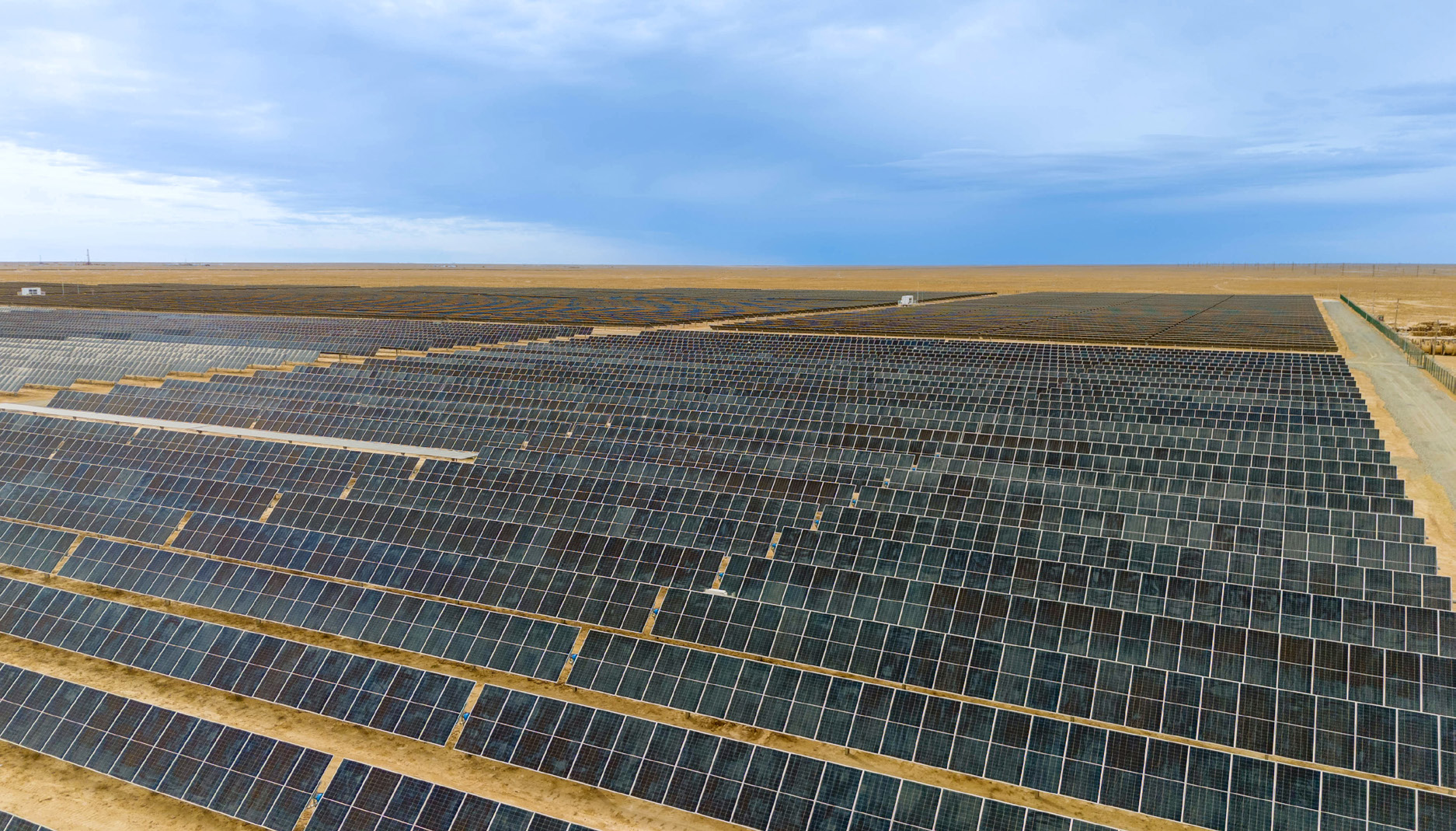
The project combines generation from renewable energy sources (wind and solar) with a gas-fired power plant (GasPP). In 2024, an EPC contract for the construction of the GasPP and the solar plant was signed. In September 2025, the solar power plant was commissioned, while construction and installation works for the GasPP are ongoing.
Construction of the “Mirny” Wind Power Plant (Aktas Energy JV)
KMG Green Energy LLP (20%), Qazaq Green Power PLC (20%), and TotalEnergies Renewables SAS (60%), through their joint venture Aktas Energy LLP, are implementing the construction of the “Mirny” wind power plant in the Zhambyl Region with a capacity of 1 GW, using a 300 MW / 600 MWh battery energy storage system. This is the largest renewable energy project in the Republic of Kazakhstan.
The project provides for the installation of 150 onshore wind turbines with a capacity of 6.5–7.7 MW each. The equipment suppliers—Envision Energy and SANY Renewable Energy—are among the world’s leading manufacturers of renewable energy equipment. In 2025, basic engineering was completed, detailed design reached approximately 81% readiness, and technical documentation is under expert review.
The project aims to enhance energy supply reliability and address electricity shortages in the southern regions of the country, while reducing greenhouse gas emissions by more than 2 million tonnes of CO₂ annually. It is expected to make a significant contribution to KMG’s decarbonization goals, ESG agenda, and diversification of the Company’s energy portfolio.
Sustainable Aviation Fuel (SAF) Production Development Project
As part of the development of a project to construct Central Asia’s and the CIS’s first sustainable aviation fuel (SAF) plant, a feasibility study was conducted in 2025 by ICF SH & E Limited with the participation of KMG, the European Bank for Reconstruction and Development, KMG-Aero, and Air Astana. The project supports Kazakhstan’s Carbon Neutrality Strategy by 2060 and IATA’s12 commitment to achieving net-zero emissions by 2050. SAF is considered a promising alternative to fossil jet fuel due to significant CO₂ emission reductions.
The study determined that the most suitable initial technology for SAF production in Kazakhstan is alcohol-to-jet (AtJ), based on the availability of feedstock in the country. The technology can operate on ethanol derived from any biological or non-biological raw material and enables up to 95% emissions reduction while improving energy efficiency.
To further promote decarbonization and green energy development, on March 31, 2025, a tripartite agreement was signed between the U.S. company LanzaJet, KazMunayGas-Aero LLP, and Dostyk Leasing LLP (Bio Operations) to prepare a feasibility study for the construction of a SAF production plant in Kazakhstan. The project aims to localize advanced American technologies and establish the region’s first SAF production facility, aligning with Kazakhstan’s climate and energy priorities while opening opportunities for long-term industrial and technological cooperation with the United States.
See more in the section “Climate Change and Low-carbon Development.”
12 The International Air Transport Association.
Procurement Practices
GRI 3-3, GRI 204–1
The total volume of the annual procurement plan for 2025 amounted to 1,299 KZT billion excluding VAT. The priority areas of KMG’s procurement activities remain the reduction of single source procurement and the expansion of competitive procedures. Competitive procurement is carried out through open tenders, request for quotations, the electronic store, and the commodity exchange.
Based on the results of 2025, the volume of competitive procurement across the KMG Group reached 626 KZT billion, which represents 48% of the annual procurement plan and reflects the Company’s commitment to the principles of fair competition and sustainable development. Single source procurement is used only in exceptional cases where it is impossible to conduct a competitive procedure.
TABLE 5. Amount of Competitive Procurement, KZT billion, excluding VAT 13
| Year | Goods | Works and services | Total | |||
|---|---|---|---|---|---|---|
| Amount | Share, % | Amount | Share, % | Amount | Share, % | |
| 2025 | 285 | 22 | 341 | 26 | 626 | 48 |
| 2024 | 258 | 22 | 335 | 29 | 593 | 51 |
| 2023 | 302 | 25 | 320 | 26 | 622 | 51 |
Preliminary Qualification of Potential Suppliers
Improving procurement activities in accordance with the requirements and standards of Kazakhstani and international practices is one of the priority tasks for KMG. An effective tool for achieving this goal is the implementation of the mechanism for conducting the preliminary qualification of potential suppliers.
Preliminary Qualification (PQ)14 is a process of evaluating potential suppliers for compliance with qualification requirements established in accordance with the Procurement Rules of Samruk Kazyna JSC. The evaluation is carried out through questionnaires and audits.
The main objectives of PQ are to identify qualified and properly selected suppliers, and to improve the efficiency of procurement of goods, works, and services for the needs of the portfolio companies of Samruk Kazyna JSC.

13 Competitive procurement includes procurement through open tender, request for quotations, e-store, and commodity exchange.
14 Potential suppliers who have passed the PQ procedure are included, by decision of the Qualification Commission, in the Register of Qualified Potential Suppliers, which is publicly available on the Samruk-Kazyna JSC procurement portal.
Category-Based Procurement
Category management in procurement is a process of developing an integrated approach to reducing costs associated with procurement activities and the use of goods, works, and services (GWS) included in priority categories.
Categorization is carried out by grouping GWS into procurement categories based on common characteristics of the procurement subject and/ or a shared market of potential suppliers. Categories may include one or multiple types of goods, works, and services. Priority categories are those with high levels of expenditure, criticality, potential for savings, and manageability.
Category management increases the potential for savings through more detailed analysis by developing and approving a procurement category strategy. This strategy defines the optimal approach to procuring goods, works, and services, based on maximizing benefits in the long term or short term perspective. Procurement category strategies must include objectives and tasks, internal and external environment analysis, approaches to category management, supplier development requirements, calculation of benefits, and an implementation plan.
Category management significantly reduces the costs of acquiring and using goods, works, and services through strategic planning, detailed analysis of procured products and services, and total cost of ownership calculations, as well as through cross functional collaboration with various business units. This procurement method is effective because it ensures both quality and transparent pricing when working with reliable manufacturers and suppliers.
Procurement category management includes:
- categorization of procured goods, works, and services and identification of priority procurement categories;
- development (updating) and approval of procurement category strategies for priority categories;
- implementation of procurement category strategies;
- monitoring of procurement category strategy implementation;
- supplier development.
TABLE 6. Volume and Benefits of Category-Based Procurement in 2023–2025, KZT million
| Indicator | 2023 | 2024 | 2025 |
|---|---|---|---|
| Volume of category based procurement | 115,545.23 | 124,942.2 | 112,183.33 |
| Benefits from category management in procurement | 7,534.63 | 13,368.3 | 18,296.6 |
Import Substitution and Local Content
KMG consistently implements a policy aimed at developing localization and supporting domestic manufacturers by increasing the share of local content in procurement, concluding long term contracts, and establishing new production facilities within the Republic of Kazakhstan.
Local Content in Procurement
Based on the results of 2025, the total volume of procurement amounted to 2,253 KZT billion, while the share of local content reached 78% (2024 – 81%). The change in this indicator is due to the adjustment of the methodology for calculating in country value in ST KZ certificates (excluding VAT and profit from the calculations) in accordance with the updated Rules for Determining the Country of Origin of Goods dated April 28, 2024 15 .
Starting from January 1, 2026, ST KZ certificates will be abolished and replaced by the Register of Kazakhstani Manufacturers, which will reflect the share of in country value in the products of Kazakhstani producers.
TABLE 7. Total Volume of Supplied GWS, Including Long-Term Procurement Contracts, and the Share of In-Country Value in GWS Procurement
| Year | Goods | Works and services | Total | |||
|---|---|---|---|---|---|---|
| Total amount(KZT billion) | Share of local content, % | Total amount(KZT billion) | Share of local content, % | Total amount(KZT billion) | Share of local content, % | |
| 2025 | 547 | 46 | 1,706 | 88 | 2,253 | 78 |
| 2024 | 503 | 55 | 1,550 | 89 | 2,053 | 81 |
| 2023 | 606 | 50 | 1,580 | 88 | 2,186 | 77 |
The total volume of goods, works and services supplied, including long-term procurement contracts, was calculated excluding procurements carried out under special procedures and procurements of KMG entities in which KMG holds less than a 50% ownership interest.
The Company assesses the share of procurement spending with local suppliers 16. In 2023, this indicator amounted to 92%, increased to 96% in 2024, and reached 87% A by the end of 2025.
15 Amendments to Annex 5 to the Rules for Determining the Country of Origin of Goods, the Status of Goods of the Eurasian Economic Union or Foreign Goods, Issuing a Certificate of Origin of Goods and Canceling Its Validity, and Establishing the Forms of Certificates for Determining the Country of Origin of Goods dated April 28, 2024
16 Local suppliers refer to suppliers of goods and services that are resident entities of the Republic of Kazakhstan.
Offtake Contracts and Support for Domestic Manufacturers
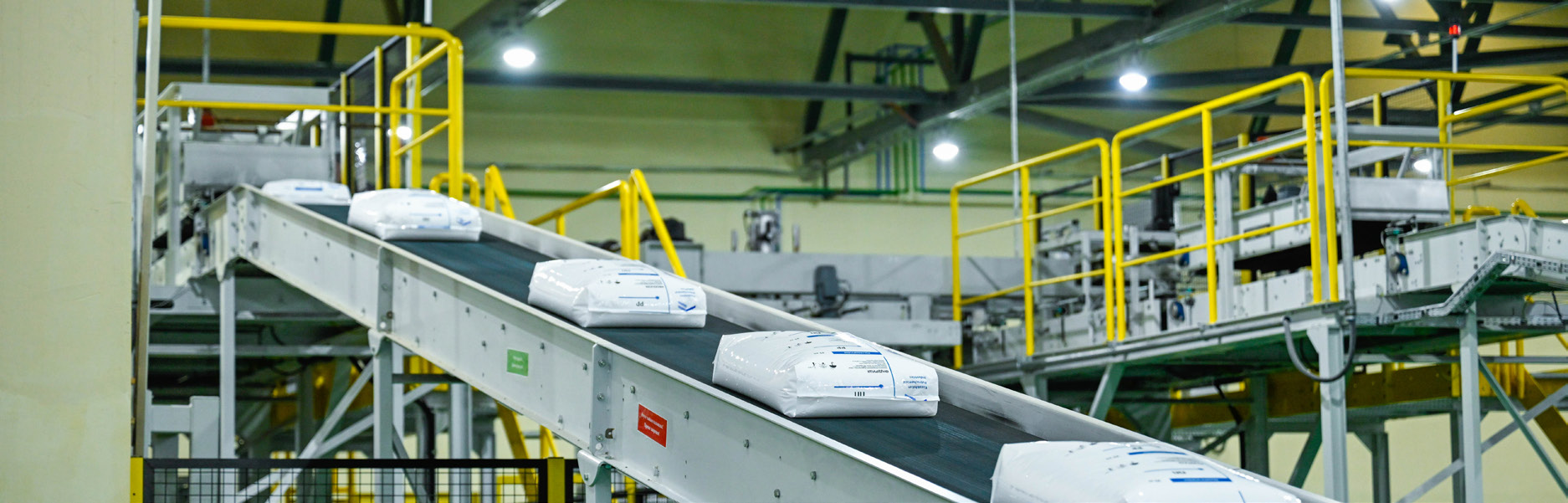
KMG actively promotes the development of import substitution in procurement, guided by the requirements of the Law of the Republic of Kazakhstan “On Procurement of Certain Entities of the Quasi Public Sector” dated June 8, 2021. A Program to Support the Creation of New Productions is being implemented, which provides for the conclusion of offtake contracts.
The main goal of the Program is to support private entrepreneurs launching new productions and implementing technological modernization to manufacture products demanded by companies of the Samruk Kazyna JSC. Offtake contracts allow companies to receive guaranteed orders for products whose production will be organized in the Republic of Kazakhstan.
In 2025, the Company continued its policy of developing in country value and expanding cooperation with domestic manufacturers. During the reporting year, the Company’s and affiliates concluded 124 offtake contracts totaling 16 KZT billion.
TABLE 8. Volume of KMG Offtake Contracts
| Year | Quantity, pcs | Total contract value, KZT million |
|---|---|---|
| 2025 | 124 | 16,031 |
| 2024 | 137 | 58,688 |
| 2023 | 64 | 1,687 |
CASE STUDY
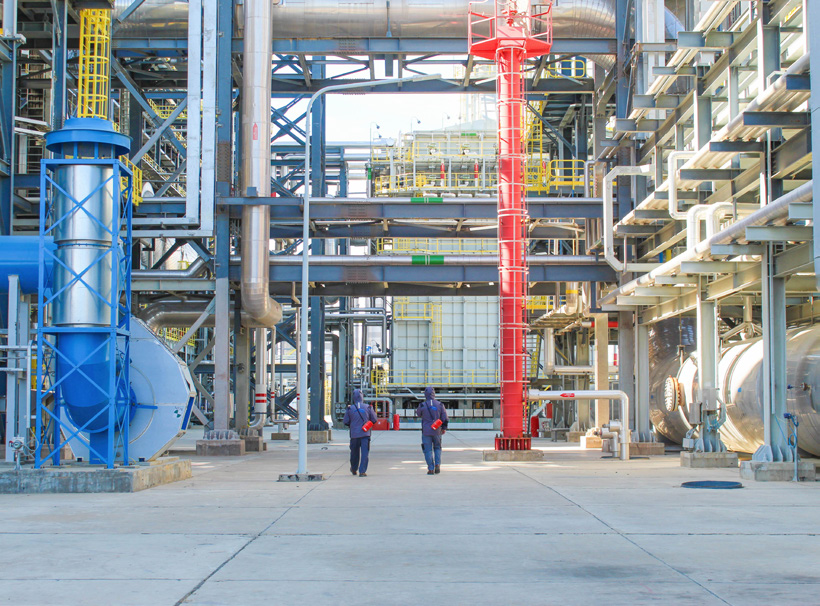
In October 2025, the Kaskor-Mashzavod LLP plant in the city of Zhanaozen was commissioned to produce oilfield equipment (tubing, sucker rods, heating furnaces) for Ozenmunaigas JSC. The implementation of this investment project was carried out under sub paragraph 14 of Article 73 of the Procurement Rules of Samruk Kazyna JSC, which provides a mechanism for concluding direct targeted contracts with enterprises that guarantee the localization of goods production in the city of Zhanaozen. The total amount of attracted investment for the project amounted to 17 KZT billion, which made it possible to create 251 permanent jobs.
Imported Goods
In 2025, the share of imported goods and goods without a certificate of Kazakhstani origin amounted to 34%, or KZT 186 billion.
TABLE 9. Imported Goods in Procurement
| Year | Amount, KZT billion | Share, % |
|---|---|---|
| 2025 | 186 | 34 |
| 2024 | 112 | 22 |
| 2023 | 158 | 28 |
Principles of Sustainable Development in Working with Contractors

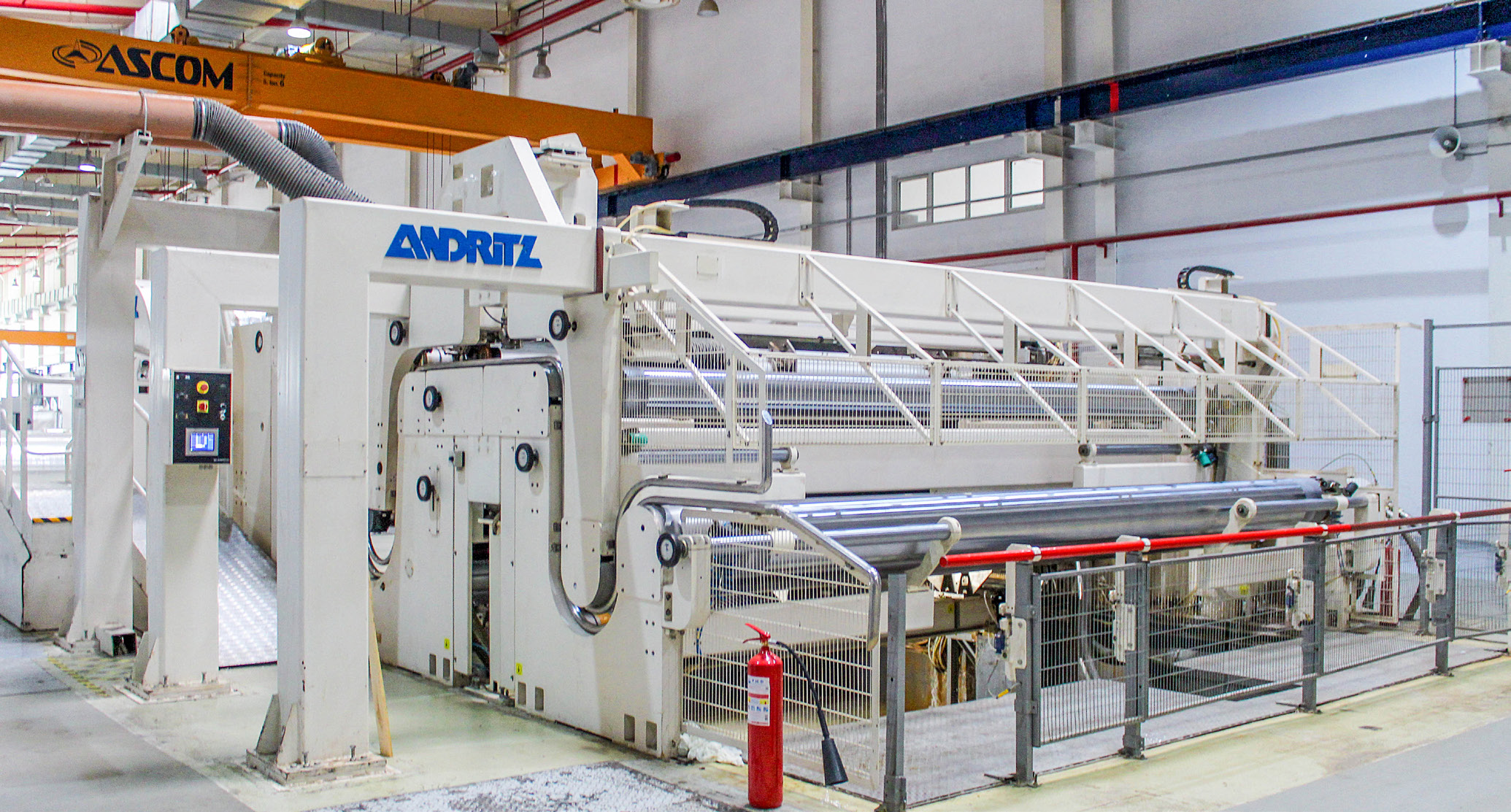
KMG builds its engagement with contractors on the principles of sustainable development, which include legality and transparency of business processes, compliance with contractual obligations, and zero tolerance for corruption. When selecting suppliers, KMG focuses on a combination of key factors: optimal balance of price and quality, delivery conditions, and the business reputation of the counterparty.
In turn, KMG places reciprocal requirements on its partners, requiring them to:
- Comply with applicable legislation
- Ensure fair treatment of employees
- Prohibit the use of child labor
- Provide safe working conditions
- Comply with environmental standards
- Follow principles of ethical business conduct
These requirements form an integral part of the contracts concluded by KMG with counterparties. Their inclusion helps protect labor rights, ensure favorable working conditions for citizens of the Republic of Kazakhstan, and strengthen environmental safety.
KMG is confident that the implementation of these measures contributes to reducing instances of improper conduct among partner companies and enhances the level of responsibility among participants in procurement processes.
CASE STUDY
In October 2025, the Kaskor-Mashzavod LLP plant in the city of Zhanaozen was commissioned to produce oilfield equipment (tubing, sucker rods, heating furnaces) for Ozenmunaigas JSC. The implementation of this investment project was carried out under sub paragraph 14 of Article 73 of the Procurement Rules of Samruk Kazyna JSC, which provides a mechanism for concluding direct targeted contracts with enterprises that guarantee the localization of goods production in the city of Zhanaozen. The total amount of attracted investment for the project amounted to 17 KZT billion, which made it possible to create 251 permanent jobs.